









The Financial Terms Every Business Leader Should Speak
Ciera Peters | The Liquidity Journal | Q2 2026
In This Article:
Assets, Liabilities, and Equity: Understanding Your Foundation
Cash Flow: The Lifeblood of Every Business
Gross Profit and Operating Expenses
Cash Flow: The Lifeblood of Every Business
Gross Profit and Operating Expenses
Most entrepreneurs start businesses because they have a vision, a skill, a product, or a mission they believe can make a difference, not because they love accounting. But, as a business grows, financial literacy becomes one of the most important leadership skills an owner can develop.
The numbers tell a story. They reveal whether growth is sustainable, whether cash flow is healthy, whether pricing is working, and whether today's decisions are strengthening or weakening tomorrow's opportunities. Yet many business owners never receive formal financial training. They learn sales, operations, marketing, leadership, and customer service, but often struggle to understand the language that drives business performance.
You don’t need to become an accountant. Financial fluency is about becoming a more informed decision-maker. The following concepts form the foundation of that language and can help leaders better understand the health, performance, and future potential of their organizations.
Assets, Liabilities, and Equity: Understanding Your Foundation
Think of your business as a house. Assets are everything you own: cash, equipment, vehicles, inventory, intellectual property, and accounts receivable all fall into this category. Liabilities represent what you owe: loans, credit cards, vendor balances, and tax obligations are common examples.
Equity is what remains after liabilities are subtracted from assets. It represents the value you've built over time. Every major financial decision ultimately impacts one or more of these three categories. Understanding them provides a clear picture of the strength and stability of your organization.
Revenue Is Not Profit
One of the most common mistakes business owners make is confusing revenue with profitability. Revenue is simply the money coming into the business. Profit is what remains after expenses are paid.
A company generating $2 million in annual revenue may be far less profitable than a company generating $500,000 if expenses are consuming most of the larger company's income. A lot of entrepreneurs will happily announce their company’s revenue because it’s more impressive, but it’s the profit that creates sustainability. A successful company focuses on both.

Cash Flow: The Lifeblood of Every Business
A profitable company can still fail for one simple reason: cash flow.
Cash flow measures the movement of money into and out of the business. When cash enters slower than expenses leave, even a profitable organization can experience financial stress.
Payroll, software subscriptions, taxes, and vendor payments do not count on future revenue. They all require cash. This is why many experienced operators consider cash flow management more important than revenue growth alone. Growth with strong cash management is scalable.
Gross Profit and Operating Expenses
So let’s talk about expenses, since not all expenses serve the same purpose.
Gross profit measures what remains after direct costs associated with delivering a product or service are removed. These direct costs are often referred to as Cost of Goods Sold (COGS).
Operating expenses are different. They include the costs required to run the business itself, including building leases, internet/other utilities, payroll, marketing, software, insurance, and professional services.
Understanding the difference helps leaders identify where efficiency improvements will have the greatest impact.
Cash Flow: The Lifeblood of Every Business
A profitable company can still fail for one simple reason: cash flow.
Cash flow measures the movement of money into and out of the business. When cash enters slower than expenses leave, even a profitable organization can experience financial stress.
Payroll, software subscriptions, taxes, and vendor payments do not count on future revenue. They all require cash. This is why many experienced operators consider cash flow management more important than revenue growth alone. Growth with strong cash management is scalable.
Gross Profit and Operating Expenses
So let’s talk about expenses, since not all expenses serve the same purpose.
Gross profit measures what remains after direct costs associated with delivering a product or service are removed. These direct costs are often referred to as Cost of Goods Sold (COGS).
Operating expenses are different. They include the costs required to run the business itself, including building leases, internet/other utilities, payroll, marketing, software, insurance, and professional services.
Understanding the difference helps leaders identify where efficiency improvements will have the greatest impact.
Why Business Leaders Track Key Metrics
Financial statements tell you what happened. Key metrics help you understand what it means. Some of the most valuable metrics include:
Profit Margin reveals how much of each dollar earned remains as profit.
Return on Investment (ROI) helps determine whether investments in marketing, technology, equipment, or personnel are producing meaningful returns.
Working Capital measures short-term financial health and indicates whether a company can comfortably meet upcoming obligations.
Debt-to-Equity Ratio compares what a company owes to what it owns and can help evaluate financial risk.
Metrics provide the information leaders need to make better decisions.
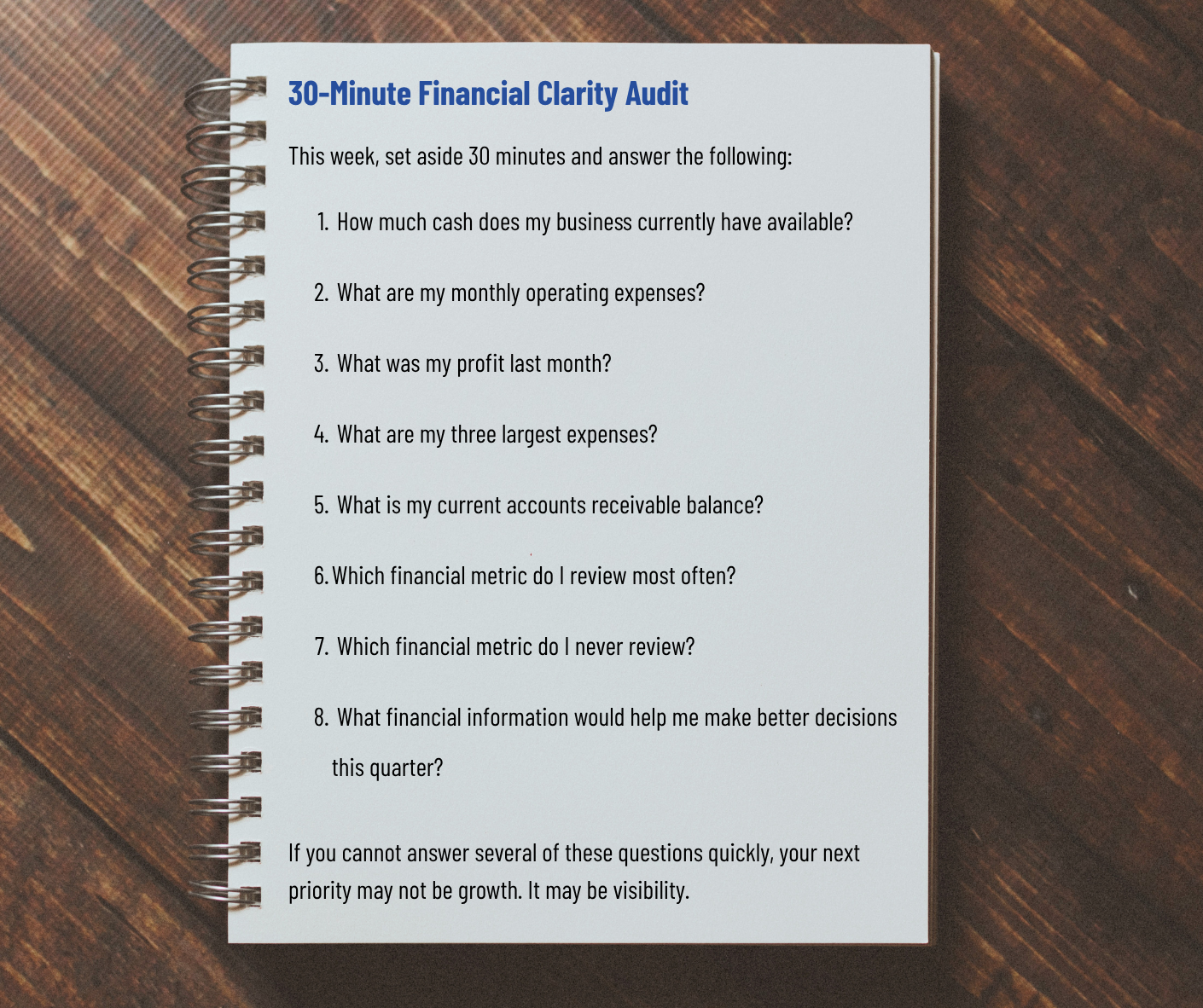
Financial Literacy and Enterprise Value
Many owners view financial literacy as a bookkeeping skill.
In reality, it is a business valuation skill because potential investors, lenders, buyers, and strategic partners evaluate companies through financial performance. Leaders who understand their numbers can communicate the health, stability, and future potential of their organizations with greater confidence.
Whether your goal is growth, succession planning, acquisition, or eventual exit, financial fluency helps transform a business from a job into an asset.
Every entrepreneur eventually reaches a point where instinct alone is no longer enough. The businesses that thrive long-term are led by people who understand both the vision and the numbers.
You don't need an MBA or any specialized skills. You simply need a working understanding of the financial language that drives your business. The more fluent you become, the more effectively you can lead, grow, and protect what you're building.
Your numbers are feedback, not just data. Financial literacy is understanding the numbers that influence every major business decision. Leaders who understand cash flow, profitability, and key performance metrics make better decisions because they operate from clarity rather than assumptions.
The goal is to gain the confidence and visibility needed to lead effectively, identify opportunities, manage risk, and build a stronger business.
Understanding financial terms is important, but applying them consistently is what drives results.
QuickBooks helps business owners organize financial data, monitor cash flow, track expenses, generate reports, and gain visibility into the numbers that matter most. Instead of spending hours manually compiling information, leaders can focus on making informed decisions backed by real-time financial insights.
Whether you're managing a growing company, preparing for expansion, or simply trying to gain a clearer understanding of your financial position, having accurate and accessible data is essential.
Save 30% on QuickBooks for 6 months
Are you not already subscribed to our mailing list? Click here, or use the following link to get our articles delivered directly to your inbox: LiquidityJournal.com/Subscribe