





The Geography of Great Ideas
Ciera Peters | The Liquidity Journal | Q3 2026
In This Article:
Your Environment Is Part of the Equation
Productive Is Not the Same as Creative
Ideas Live at the Intersections
We tend to think of great ideas as the product of great minds. We picture the leader sitting at a desk, the architect at a drafting table, the writer staring at a blank page until the answer finally arrives. But there is another variable we don't talk about nearly enough: where the thinking happens.
The environment around us can silenttly influence how we focus, what we notice, how we connect ideas, and even how much mental energy a task requires.
I've noticed this myself recently while working from places that weren't particularly comfortable or conducive to concentration. Work that would normally feel straightforward suddenly required more effort. My attention wandered. Simple tasks took longer. My thoughts felt less organized.
It was tempting to interpret that as a motivation problem, but perhaps it was partly an environmental problem and that distinction matters.
Your Environment Is Part of the Equation
We often treat productivity as though it is entirely an internal quality.
Discipline. Focus. Motivation. Time management. All important. But none of them operate in a vacuum.
A person who is trying to concentrate in a noisy, uncomfortable environment is not necessarily less disciplined than someone working in a quiet office. Their brains are simply processing more information at the same time.
The chair that doesn't quite fit. The sounds coming from another room. The temperature. The people moving around. The lack of privacy. The unfamiliar surroundings.
None of these things may be significant enough to consciously notice. Together, however, they can create friction, and friction has a cost.
The opposite is true as well. The right environment can reduce the amount of energy required to do something. A quiet room can make deep work easier. A walk can help untangle a complicated problem. A coffee shop can provide enough background stimulation to make creative work feel easier.
One environment is universally better than another, it's that different environments are good at different kinds of thinking.
Productive Is Not the Same as Creative
We often use productivity and creativity interchangeably, but they are not the same thing. Productivity is often about execution, but creativity is about connection. One requires concentration and consistency. The other benefits from exposure, movement, interruption, curiosity, and sometimes even a little disorder.
The environment that allows you to efficiently work through a spreadsheet may not be the environment where you develop your next business idea.
The conference room may be excellent for making decisions but terrible for imagining possibilities.
In “Traction”, Gino Wickman suggests taking a clarity break and he specifically says it must not be in the office. Your office, even if it’s a home office, may be perfect for focused execution but a walk around an unfamiliar neighborhood may be better for solving a problem you've been staring at for three hours.
This is why changing environments can sometimes feel strangely productive even when you aren't technically doing more work. You may be giving your brain a different set of conditions in which to work.

Familiarity Has a Cost
There is another reason that environment matters. Familiarity makes life easier. We know where things are. We know what to expect. We recognize the people around us. We follow established routines without having to think about them.
That efficiency is valuable, but familiarity also narrows our field of vision. When we spend most of our time in the same places, surrounded by the same people and exposed to the same information, we become very good at seeing the world through the same frame. That’s why it’s hard to notice someone’s appearance slowly changing when we see them often, but extremely obviously when we haven’t seen them in a while.
This isn't necessarily a problem until we're trying to solve a problem that requires us to think differently.
Sometimes we don't need more information. We need different information. And sometimes we don't need another podcast, another book, another article, or another expert telling us what to think. We need enough distance from our usual environment to process what we already know differently.
Ideas Live at the Intersections
Some of the most interesting ideas don't originate entirely within one field. They happen at the intersection of several.
A restaurant owner might notice how an airline handles logistics.
An architect can learn something from observing how a natural ecosystem organizes itself.
A business owner could see a better way to manage customer flow after spending an afternoon watching how a museum moves visitors through an exhibit.
The connection may seem obvious in hindsight, but it wasn't obvious before the person encountered it. This is one reason exploration is so valuable. When you encounter something unfamiliar, your brain has new material to work with. You don't necessarily need to go halfway around the world either, a different city or industry can be enough. A conversation with someone who approaches work completely differently can be enough. Even skipping your usual favorite and trying a new dish can introduce something your brain wasn't expecting. We’re not seeking novelty for novelty's sake. We’re expanding the map.
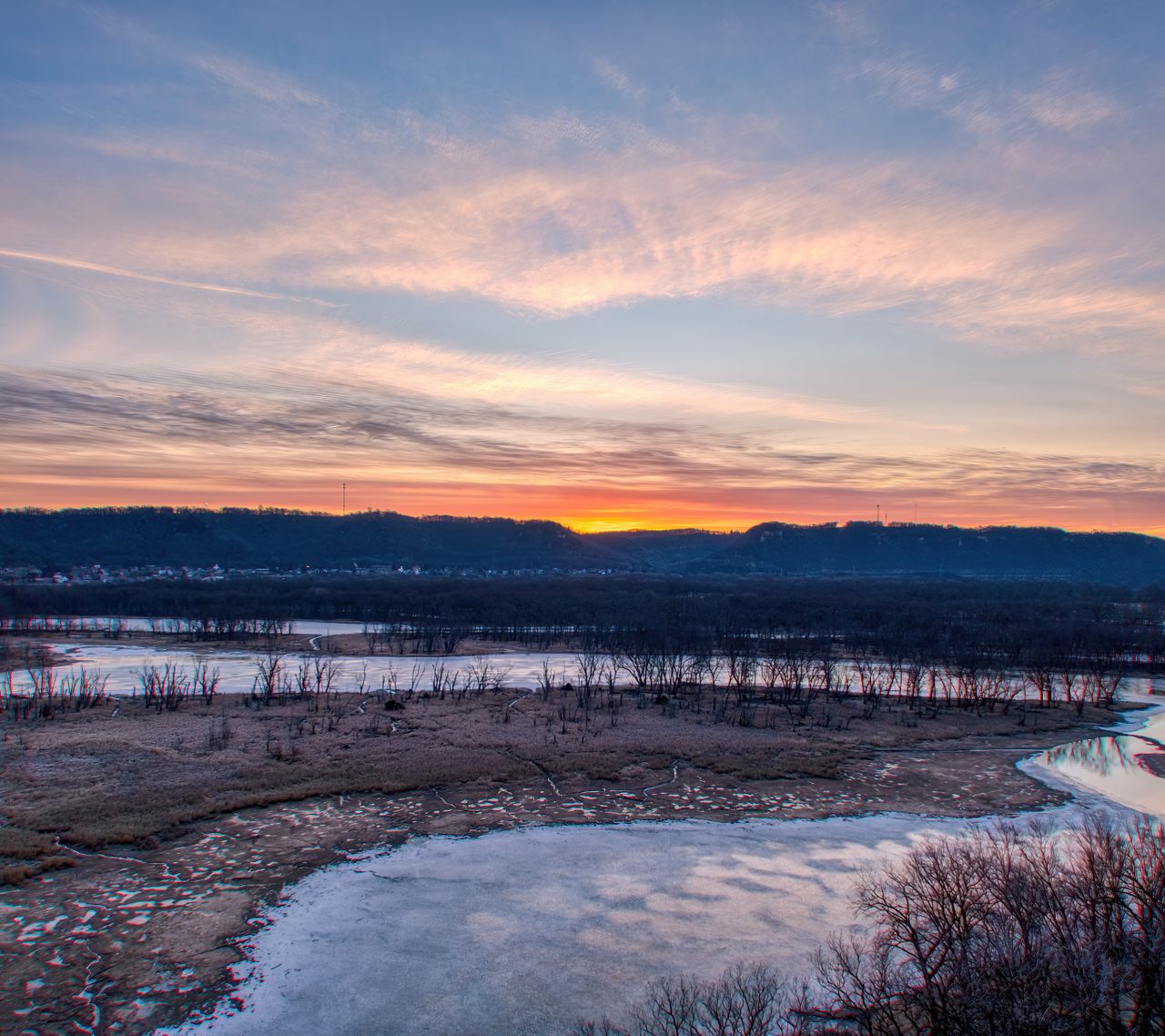
Change the Geography of Your Thinking
We tend to think of exploration as something we do when we have time.
A vacation, a weekend away, or a conference in another city. Something separate from "real work”, but exploration can also be a business practice.
If you need to generate ideas, leave the environment where you normally execute. Trying to solve a strategic problem? Consider changing where you work on it.
If you've been researching the same problem for weeks, stop gathering information for an afternoon and go somewhere unfamiliar.
Spend time somewhere where your customers spend time, if you’re trying to understand them.
The change in environment may not immediately produce an answer, but it will give your brain different inputs, different associations, and a little distance from the patterns it has been repeating.
Build a Larger Mental Map
There is a tendency in business to become increasingly specialized.
Specialization is useful, as it allows us to develop expertise, efficiency, and depth, but depth without width can create blind spots. The more limited our experiences become, the easier it is to assume that the way we've always done something is simply the way something is done.
But exploration gives us comparison. It reminds us that our way is one way. Just that realization alone can be valuable.
You don't have to (and you shouldn’t) adopt everything you encounter. The purpose of exploring other environments isn't to constantly abandon what works, but to give yourself opportunities to question what you've assumed. Maybe you return to your original approach with greater confidence or maybe you discover a better one.
Either way, you've expanded your perspective.
Try Changing the Place, Not the Problem
The next time you're stuck on a problem, resist the immediate urge to gather more information. Instead, change your surroundings. Spend an afternoon somewhere you've never been. Take the meeting somewhere else, I myself enjoy coffee shops. Or maybe just work from a different room.
Then come back to the problem.
You may find that the answer hasn't changed, but your relationship to the question has. That is the value of changing our geography. Sometimes we need to find somewhere different to think.
Great ideas don't always need more information.Sometimes they need more perspective.
You don't always need a better answer. Sometimes you need a different place to ask the question.
Are you not already subscribed to our mailing list? Click here, or use the following link to get our articles delivered directly to your inbox: LiquidityJournal.com/Subscribe