








Thinking in Seasons
Ciera Peters | The Liquidity Journal | Q3 2026
Why summer may be the ideal time to expand your perspective instead of expanding your calendar.
In This Article
The value of seeing something different
Perspective is not always found by working harder
There is something about spring that makes it difficult to stay exactly where you are.
The days get longer. Trees begin to fill in. Flowers appear almost overnight. After months of gray skies and bare branches, the world starts moving again.
Then summer arrives with a different kind of energy. There is more light. More warmth. More time outside. There is a feeling of possibility in the air, even if nothing about your actual schedule has changed.
This could be why spring and summer have always felt like natural seasons for exploration.
Not necessarily for doing more, but for seeing more.
Somewhere along the way, we began treating every season as an opportunity to optimize. Winter becomes a time to plan. Spring becomes a time to execute. Summer becomes a time to take advantage of longer days and accomplish even more. Then fall arrives, and we start planning for the next year.
There is always something to improve. Something to build. Something to learn. Something to accomplish.
Even rest has become productive.
We don't simply go on vacation anymore. We take a "reset." We don't just read a book because we want to. We read because it will make us better leaders. We don't take a walk because it feels good. We listen to a podcast while doing it.
The calendar stays full. We have simply found more sophisticated ways to describe the things we do when we are “not working”.
But perhaps summer is a good time to question that instinct.
Perhaps the point of summer is not to expand the calendar.
Perhaps it is to expand our perspective.
The value of seeing something different
Most of us spend a surprising amount of time on autopilot; moving through the same patterns.
We take the same route to work. Shop at the same stores. Talk to the same people. Read the same publications. Visit the same restaurants. Consume the same types of information.
There is nothing inherently wrong with routine. In fact, routines are incredibly useful. They reduce the number of decisions we have to make and help us conserve energy for the things that matter.
But routines can also become invisible.
We stop noticing the route we take every day. We stop questioning assumptions we have held for years. We stop looking for alternatives because the familiar option is usually good enough.
When we spend too much time inside the same patterns, our perspective can quietly become smaller.
This is one of the reasons exploration matters.
A new place gives you new information. A new conversation gives you a new point of view. A new experience gives your mind something different to work with.
You may not immediately discover a business idea, solve a major problem, or have a life-changing realization.
That is not the point.
The point is that your mind is no longer receiving exactly the same inputs. Sometimes, that is enough to make an impact.

Perspective is not always found by working harder
As business owners, executives, and ambitious people, we are often encouraged to solve problems by applying more effort.
Work longer, research more, gather more information, have another meeting, build another spreadsheet.
Sometimes that is exactly what is needed, but there are also problems that cannot be solved by staring at them harder. Sometimes you need to step away from the problem long enough to see it differently.
A business owner might spend months trying to solve a staffing issue before realizing that the problem is not the people. It’s the structure. A leader might continue trying to grow a business by adding more customers when the real opportunity is improving the existing customer experience. Someone might spend years trying to reach a goal that no longer matters to them simply because they never stopped long enough to ask whether they still wanted it.
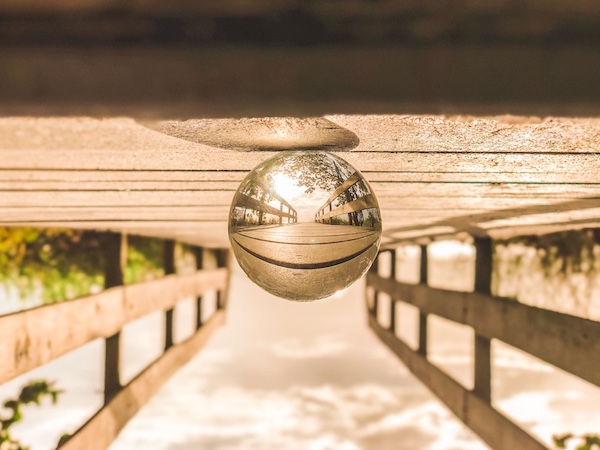
More information does not always create more clarity. Sometimes clarity comes from changing the angle.
This is why I have been thinking more about the things I am personally exploring right now. New places. New ideas. New experiences. Different ways of looking at familiar questions.
Not because every exploration needs to become a project. Not because every book needs to become a lesson. Not because every trip needs to produce a business opportunity. Sometimes the experience itself is enough.
The case for doing things simply because you want to
There is a particular kind of freedom that comes from doing something without needing to justify its usefulness.
Go somewhere because you have never been there before.
Read something because the subject interests you.
Take a class because you have always wondered what it would be like.
Visit a neighborhood you have never explored.
Spend an afternoon outside without turning it into a productivity exercise.
Talk to someone whose life looks completely different from yours.
There is value in doing things simply because they are interesting.
In fact, that may be one of the most underrated ways to expand your perspective.
When everything must have a measurable outcome, we start filtering our lives through the question: What will this do for me?
But not every experience needs to produce a return on investment.
Some experiences simply give us more to draw from later. A conversation becomes an idea months afterward. A place you visited influences the way you think about design. A book changes the question you ask. A difficult experience gives you a new understanding of someone else's perspective.
We rarely know in advance which experiences will matter, but that is part of the point.

A season for reflection
Of course, exploration does not have to mean constant movement.
Sometimes expanding your perspective requires going somewhere new, but other times it requires staying still long enough to think.
Rest creates space. Reflection helps us process what we have seen. Fun reminds us that life is not simply a series of objectives to complete.
These things are not necessarily separate from achievement.
They may be part of what makes meaningful achievement possible.
A person who never steps away from their work may become highly efficient at solving the wrong problems. A leader who never encounters new ideas may become increasingly confident in an increasingly narrow view of the world. A business owner who never pauses may continue building a business that no longer fits the life they actually want.
I'm not saying abandon ambition, just make sure ambition does not become the only lens through which we see.
This week's challenge:
This week, take a different route to work.
It doesn’t have to be dramatically different. You don’t need to turn your commute into an expedition.
Just choose a road you normally ignore. Take the long way. Turn left instead of right. Walk a different route if you are able.
You’re not aiming to make your commute more efficient.
This is to notice what you normally miss.
What businesses have you never seen before? What neighborhoods have you passed without really observing? What did you notice when you were no longer moving through a familiar pattern?
Then ask yourself:
What else in my life have I been navigating on autopilot?
You may not find an answer immediately.
That is okay.
Perspective doesn’t show up on command.
It may begin with something as simple as taking a different street.
The seasons will continue to change whether we pay attention or not.
Spring will bring the world back to life. Summer will bring its energy and freedom. Fall will eventually remind us that change is constant.
We don’t have to wait for a new season to explore, but perhaps this is a particularly good time to begin.
You can start by just looking at the world a little differently. The best ideas are not always found by working harder inside the same environment. Perhaps, they are waiting somewhere just beyond the familiar.
Are you not already subscribed to our mailing list? Click here, or use the following link to get our articles delivered directly to your inbox: LiquidityJournal.com/Subscribe