





Can We Talk for a Minute? The Fastest Way to Protect a Claim Is Still the Simplest One: Read
Randolph Love III | The Liquidity Journal | Q2 2026
In This Article:
The Real Bottleneck Is Often Not the Carrier. It Is the Missing Step
The Most Important Section in the Policy Is Usually Not the One People Obsess Over
Most Insureds Cannot Do This Alone, and That Is Precisely the Point
A Proof of Loss Is Not Just Paperwork. It Is Positioning
Reading Also Protects the Professionals Doing the Work
“Factors Beyond Our Control” Is Not a Magic Phrase
The Goal Is Not Conflict. The Goal Is Competence
At the Iowa Claims Conference in Des Moines, I stood in front of a room full of professionals who work close to the fire. Public adjusters. Contractors. Attorneys. People who deal in urgency, emotion, damage, delay, and dollars.
And I opened with a typo.
That felt appropriate.
Because my presentation was about reading, reading correctly, and understanding what is actually on the page before a claim becomes a fight, a delay, or a forfeited right. It was a reminder that in this business, small oversights can create very large consequences. A missing sentence, an ignored deadline, an unread policy provision, or an unsubmitted proof of loss can quietly do more damage than the storm that started the claim.
I have spent nearly two decades in insurance and financial services. I have worked as an agent, adjuster, appraiser, umpire, expert witness, educator, and consultant. I have seen this industry from multiple seats, and one lesson continues to repeat itself.
All truths are parallel.
What is true in one part of life is often true in another. Before you eat something, you should know the source. Before you drink something, you should know the source. Before you take action on a claim, you should know the source document that governs that claim.
That source is the policy. Not assumptions. Not habits. Not what somebody said usually happens. Not what worked on the last file. The policy.
And if you are trying to help an insured recover as quickly as possible, at the highest indemnity possible, without forfeiting any rights, then reading is not optional. It is operational.
The Real Bottleneck Is Often Not the Carrier. It Is the Missing Step
In the claims world, people often talk about leverage as if it begins with confrontation. I do not see it that way. In my experience, leverage often begins with compliance.
If the goal is to help an insured recover fully and quickly, then the first question is not, “How do I pressure the other side?”
The first question is, “What must be done to preserve every available right?”
That is where many claims slow down before they ever gain traction.
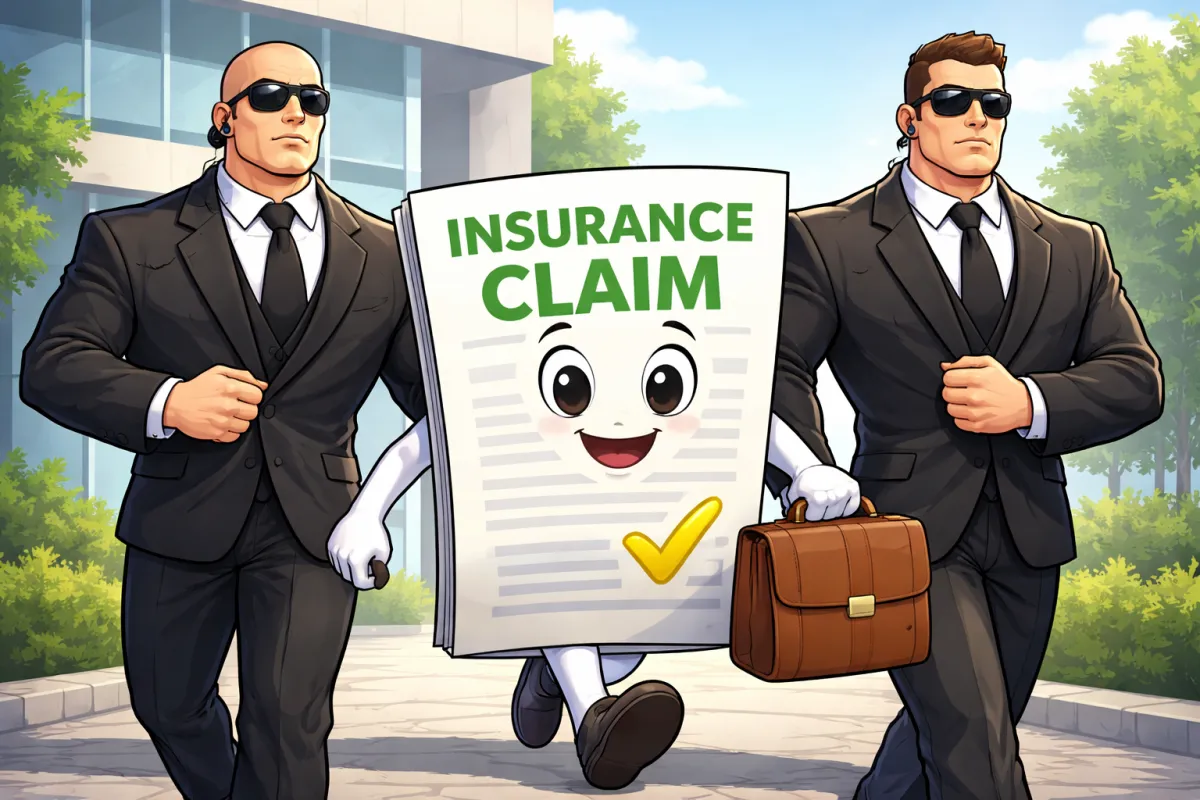
One of the biggest points I made in Des Moines was the importance of the signed sworn proof of loss. I used Florida law and policy language in my presentation because that is where much of my direct statutory work has been grounded, but the broader lesson travels well across jurisdictions: rights are often tied to process, and process is often tied to documents.
Too many people treat the proof of loss like an optional formality.
It is not.
In many cases, it is the hinge the entire door swings on.
A properly handled proof of loss can shorten the path to a meaningful carrier response. A poorly handled one, or a missing one, can stretch out the timeline, create unnecessary ambiguity, and in some situations weaken the insured’s position before the real argument even begins.
That matters because time feels different when your home is damaged, your business is interrupted, or your family cannot fully use the property. Thirty days on a legal calendar can feel like thirty years to the person living through the disruption.
The Most Important Section in the Policy Is Usually Not the One People Obsess Over
Ask people what part of the policy matters most, and you will hear a lot of discussion about declarations, exclusions, and endorsements. Those matter. Of course they do.
But when it comes to actually moving a claim forward, I believe one of the most important sections in the policy is often the duties after loss provision.
That section is where the policy stops being theoretical and starts becoming practical.
It tells the insured what must be done.
It tells the carrier what will be expected.
It often outlines deadlines, documentation obligations, cooperation requirements, and the procedural path that has to be followed before the claim can mature into payment, dispute resolution, or litigation.
In other words, it is the instruction manual people skip because they are already trying to turn the machine on.
That is a mistake. You cannot afford to freestyle inside a contract.
If the policy requires immediate notice, that matters.
If the policy requires a signed sworn proof of loss, that matters.
If the carrier requires use of its own form, that matters.
If the state requires certain language in a particular format, that matters.
This is where claims professionals earn their value. Not by sounding confident, but by being correct.
Most Insureds Cannot Do This Alone, and That Is Precisely the Point
One of the observations I made during my talk is that the average insured is not equipped to fully satisfy all of the post-loss obligations buried in a policy.
That is not an insult. It is just reality.
Most homeowners do not spend their spare time reading claims statutes. They do not study proof of loss requirements. They do not analyze whether a statement must be sworn, notarized, carrier-specific, or accompanied by a particular warning in a certain font size. They do not instinctively know how supplemental claims differ from reopened claims, or how missed notice can become a trap door.
That is exactly why details matter so much.
When professionals step in, the job is not just to increase the payout. The job is to reduce the chance that the insured unknowingly harms their own position.
That is why I believe so strongly that this work starts with reading and not rhetoric.
A claim can be undermined long before anyone raises their voice.
A Proof of Loss Is Not Just Paperwork. It Is Positioning
I also spent time discussing what makes a statement truly sworn, what makes a proof of loss compliant, and why the exact language matters.
That may sound technical, but technicality is often where the money lives.
A missing sentence may seem minor until someone argues the document was not actually sworn.
A missing disclosure may seem harmless until someone says the proof of loss was defective.
A missing reservation of rights regarding hidden damage may seem like no big deal until additional damage is discovered later and the other side acts surprised.
That is why I have long believed in building claims files that anticipate the next conversation, not just the current one.
If hidden damages may exist, say so.
If supplemental information may be needed, reserve that right clearly.
If carrier-specific forms may apply, request them early.
If a timeline can be shortened by proper submission, do not wait around hoping the clock solves itself.
Hope is not a claims strategy. Precision is.
Reading Also Protects the Professionals Doing the Work
One of the most practical points from the conference had nothing to do with dramatic disputes and everything to do with everyday discipline.
If a public adjuster prepares an estimate, that estimate should not just be sent into the void. The insured should receive it. The insured should be given the opportunity to confirm it, question it, or correct it. That is not merely good customer service. It is part of keeping the file clean, the representation clear, and the professional protected.
That kind of documentation does two things at once.
First, it reinforces that the claim belongs to the insured, not the representative.
Second, it creates a record that the insured was informed and engaged.
In a business where memories change and disputes can become very specific, verifiable communication is not a luxury. It is a shield.
“Factors Beyond Our Control” Is Not a Magic Phrase
Another issue I addressed in Des Moines is the way delay can hide behind vague language.
Anyone who has worked enough claims has heard some version of this: circumstances beyond our control, system issues, operational delays, complications, pending review.
Sometimes those explanations are legitimate. Sometimes they are not.
That is why professionals need to know what actually qualifies, what does not, and how far a carrier can legitimately extend time under the law that applies. General language should not be allowed to do the work of specific authority.
A claim professional who reads well is harder to stall.
Not because they are louder, but because they know where the line is.
The Goal Is Not Conflict. The Goal Is Competence
I am not interested in turning every claim into a war.
I am interested in making sure insureds are not left unprotected because the people around them skipped the reading.
When I talk about moving a claim quickly and maximizing indemnity without forfeiting rights, I am not talking about gamesmanship. I am talking about professionalism.
That means reading the policy.
That means reading the statutes that apply.
That means understanding when a timeline can be triggered, when it can be tolled, and when a request is too late to suspend the clock.
That means knowing where your role begins and ends.
That means recognizing when the matter has moved beyond claims handling and into legal territory.
And if it reaches that point, the answer is simple.
Get the attorney involved.
Not because the file failed, but because the next phase requires a different kind of authority.
What I Wanted That Room to Remember
At the Iowa Claims Conference, I wanted the room to walk away with something more useful than motivation.
I wanted them to leave with a filter.
When a claim becomes confusing, read.
When a deadline feels unclear, read.
When a carrier says something that sounds right but feels off, read.
When an insured is relying on you to preserve rights they do not even know they have, read.
People pay attorneys a premium in part because most people hate to read. That is not a joke. It is a market reality.
But in the claims world, reading is not just a legal habit. It is a recovery tool.
And the professionals who read well do more than protect themselves. They protect the people who trusted them at one of the most stressful moments in their lives.
That is work worth taking seriously.
This article is for informational purposes only and is not legal advice. Policy language, statutory requirements, and claims procedures vary by state and carrier, so readers should review the governing policy and applicable law in their jurisdiction.
If you would like to book me to speak at your upcoming event, visit RandolphLove.com.


