







End-of-Year Financial Moves for Protection and Impact: Who Should Not Buy an IUL
Randolph Love III | The Liquidity Journal | Fall 2025
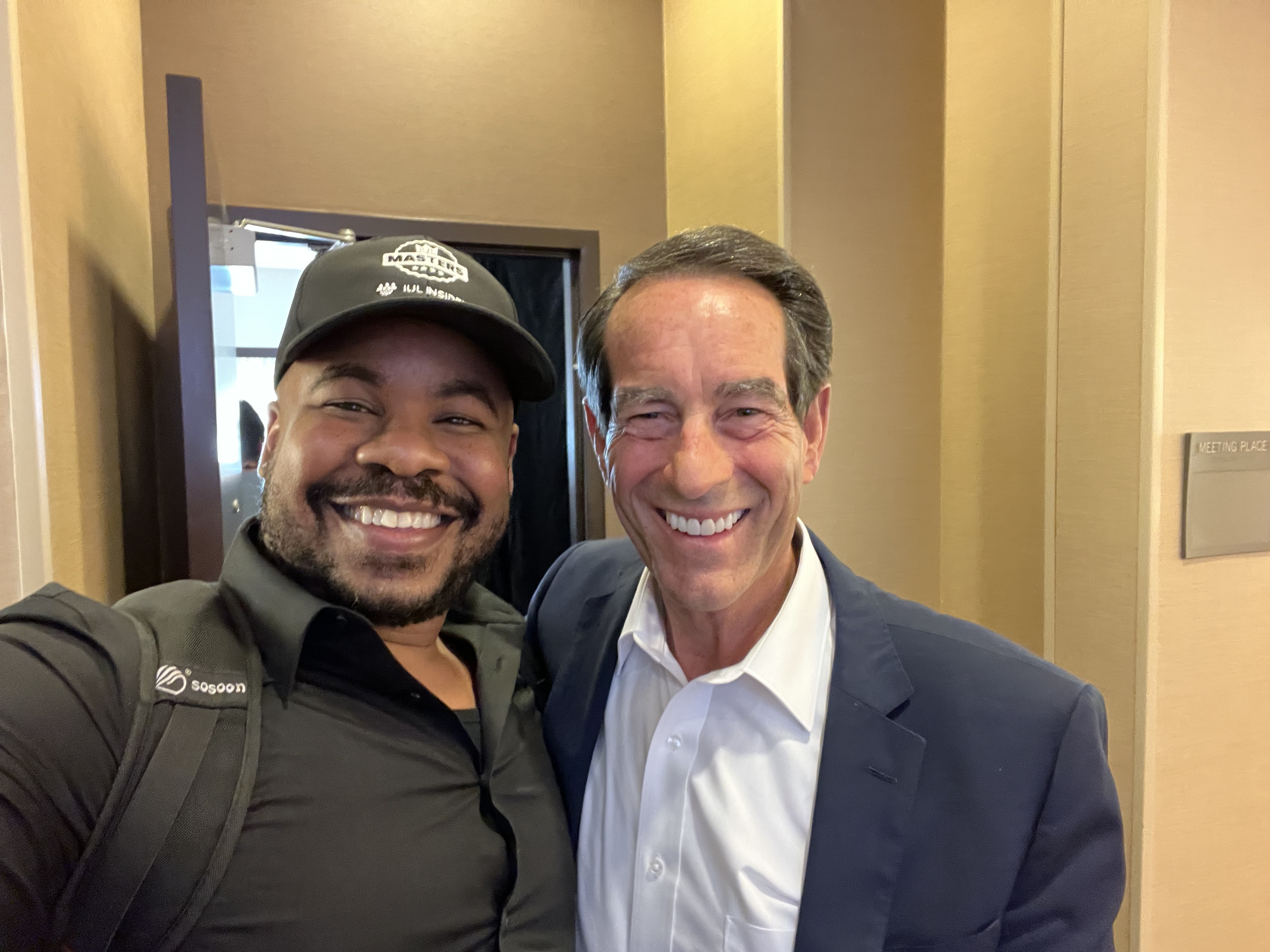
As the year draws to a close, savvy business leaders and investors often pause to reflect on strategies that safeguard wealth while amplifying long-term impact. It's a time for decisive moves: rebalancing portfolios, optimizing tax positions, and fortifying financial foundations against uncertainty. Recently, I had the privilege of sitting down with my longtime mentor, Doug Andrew, a financial strategist with over five decades of experience guiding thousands toward secure retirements and legacy-building. In our private conversation, Doug shared candid insights on indexed universal life insurance (IUL), a tool he champions for disciplined wealth accumulators but warns is far from a one-size-fits-all solution. What emerged was a masterclass in strategic discernment, tailored for those at the helm of businesses, investments, or personal empires.
Doug, ever the straight-shooter, leaned back in his chair during our chat at his Salt Lake City, Utah office, a space lined with bookshelves groaning under the weight of bestsellers like his own Last Chance Millionaire, a New York Times and Wall Street Journal No. 1 hit that dissected the financial pitfalls facing baby boomers. "Randolph," he began, his voice carrying the gravitas of someone who's seen market cycles come and go, "let's get frank about IULs. They're a dream vehicle for long-term goals like retirement, college funding for kids or grandkids, business working capital, or even maximizing pensions for teachers, police officers, and firefighters. But they're not for everyone. In fact, starting one without the right mindset can lead to disappointment or worse, financial regret."
He sketched a bell curve on a notepad, echoing the framework from his book, dividing people into five archetypes: Strivers, Arrivers, Thrivers, Survivors, and Divers. "Most Americans, sadly, fall into the Striver category," Doug explained. "They're the masses living paycheck to paycheck, with too much month left at the end of their money. They might have less than $100,000 socked away for retirement, yet dream of sustaining a $50,000 to $70,000 lifestyle on that nest egg. It's impossible. These folks often prioritize immediate luxuries, boats, jet skis, bigger homes, over disciplined saving. They're what I call 'financial jellyfish,' drifting toward instant gratification without sacrificing for a brighter tomorrow."
In our discussion, Doug emphasized that Strivers and anyone lacking the discipline to live on less than they earn should steer clear of IULs. "If you're tempted to raid your savings for an RV show splurge or can't commit to socking away $500 or $1,000 monthly without interruption, an IUL isn't your play," he advised. "It's a long-term commitment, requiring at least five years of maximum funding under tax codes like TEFRA, DEFRA, and TAMRA to unlock tax-free growth. Fund it sporadically or pull from it like a bank drive-thru, and you'll miss the compounding magic."
Doug's wisdom here aligns with the strategic systems we champion at The Liquidity Journal: building resilient financial architectures that compound over time. He contrasted IULs with traditional vehicles like IRAs, 401(k)s, and even Roth IRAs. "A properly structured, max-funded IUL can net 10% cash-on-cash after averaging 11% returns, doubling your money every 7.2 years via the Rule of 72," he said, his eyes lighting up. "That means a million dollars could generate $100,000 annually in tax-free income. But in a tax-deferred IRA or 401(k) exposed to market volatility, you'd need 15 to 16% returns just to match that net after taxes and fees. And Roths? They're solid for tax-free access, but limited by income caps and contribution limits. You can't dump $300,000 annually like in an IUL, which savvy CPAs call the 'rich person's Roth.' Plus, Roths don't 'blossom' upon death. An IUL can double your payout tax-free, funded by what would otherwise be unnecessary taxes."
Yet, Doug was adamant about the pitfalls for the unprepared. "If you don't understand structuring, minimizing insurance costs so cash value exceeds premiums within 11 to 15 years, or if your agent skips annual reviews for rebalancing, you'll be lucky to net 2 to 3%," he warned. "I've seen policies after 30 years where cash value doesn't even match contributions. That's not strategy; that's a tragedy." He pointed to real estate investors and business owners who thrive with IULs as working capital reservoirs: "They max-fund in five years, borrow at 5% while earning 10%, effectively hiring an 'employee' that doubles their return. But only if they're committed to the 'put and keep' discipline, not 'put and take.'"

Our conversation turned motivational, underscoring leadership in personal finance. "Thrivers and Arrivers, those who've mastered living below their means and committing to long-term goals, are ideal for IULs," Doug said. "It's superior for emergency funds, pension maximization (ditching survivor benefits to funnel savings here), or outperforming 529 plans for college. But if you're a Striver, start small: act your wage, cut credit cards, get out of debt. Build that discipline first."
As entrepreneurs and executives gear up for end-of-year maneuvers, Doug's advice resonates: Audit your habits. If an IUL fits your disciplined strategy, it can protect against market dips (no losses when indices fall, gains when they rise) and amplify impact through tax efficiency. But if not, pivot to foundational steps before leaping.
For those ready to explore, Doug generously offers his latest bestseller, The LASER Fund, a dual-sided tome blending data-driven charts with storytelling metaphors, free with nominal shipping at laserfund.com. It's a resource that has transformed how I approach wealth protection.
In the spirit of innovation and growth, I encourage you to visit Shieldwolf Strongholds at shieldwolfstrong.com for tailored strategies that fortify your financial legacy. As Doug reminded me, true leadership starts with discerning what not to do, ensuring your moves this year-end propel you toward enduring impact.


